Songs of the 1798 Rebellions
The rebellions that happened throughout Ireland in 1798 inspired an impressive collection of songs. These songs have not only inspired generations of Irish, but they were also large parts of what attracted us, Rush the Growler, to Irish music and Irish history in the first place.
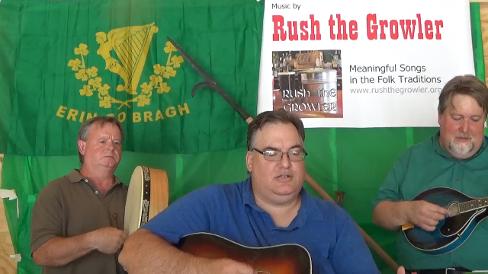
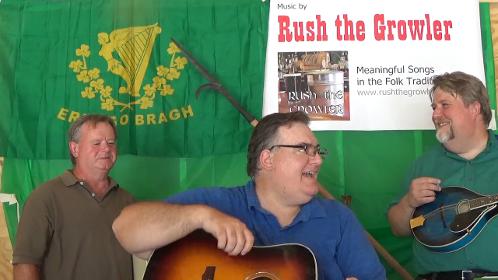
In 2016, It was our honor to make a presentation at the Celtic College about song by and about the 1916 Easter Rising. The video for that can be found here. That presentation turned out so well that in 2017, the following year, we tried to do one on the songs from the 1798 Rebellions. Unfortunately, music from one of the nearby festival stages bled through so much that the video itself is unusable. Ever since then, Scott has wanted to redo that set so that we could get better video. In 2024, we met several times in order to rehearse and perform the songs. The following clips come from our final session. We were recording in Brian's garage, so the sound quality is not what you would get from an actual studio, but we were glad to get recording that could be shared. (Video versions may be added to this page someday too, if Scott ever gets around to editing them.)
The Rising of the Moon- 8-10-2024.mp3
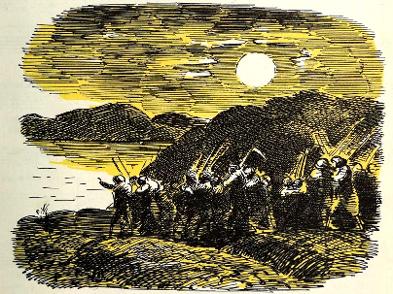
1. The Rising of the Moon
This first selection, "The Rising of the Moon", has become a symbol of the 1798 Rebellion. It was written by John Keegan Casey, who was a teenager in Ireland in the 1860s. He would later be imprisoned for being a Fenian.
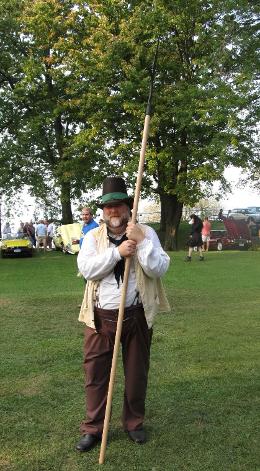
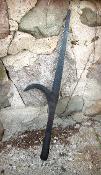
The song speaks of a time just prior to the 1798 rebellions, when the rebels were organizing. Watchwords were being chosen. Blacksmiths and carpenters were building pikes, the Irishmen's weapon of choice. Pikes have become icons of the 1798 rebellions. They were relatively easy to construct and use, and the pieces could be hidden in many places. These long pole weapons often had a hook at the end that could be used to pull down horsemen.
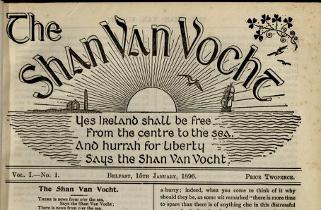
2. The Sean Van Vocht
The movement that brought about the rebellions of 1798 was inspired by two other rebellions- the American Revolution and then, in 1789, the French Revolution. The message of these events excited the peasants and middle class in downtrodden Ireland, and they formed the "United Irishmen" to fight for the ideals of "Liberty, Equality, and Fraternity!" Leaders like the Protestant lawyer Theobald Wolfe Tone, were trying to get French support for the Irish who were rising against English domination.
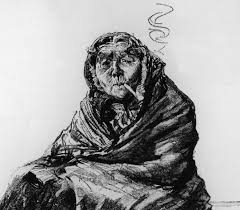
The phrase "Shan Van Vocht" in the title of this song means "The poor old woman." She represents Ireland herself, in much the same way that Tommy Makem would use the "fine old woman" to represent Ireland in his song "Four Green Fields." From 1796 on, this poor old woman was waiting with her United Irishmen and hoping for a French to send in invasion fleet to aid them in their fight against the English.
This song introduces us to the two sides in the upcoming fight-- the Green, who are the United Irishmen, and the Orange,the supporters of the English government. The "yeomanry" or the "yeos" are also introduced in this song. The yeomen were the middle class landowners, but the term here refers to the cavalry force that the British formed to "defend" their control of Ireland. The yeomen were good at terrorizing the Irish population, and they treated the Catholic peasants with a cruelty that was meant to prove their loyalty to the crown.
In January of 1797, the first attempt was made by the French to send a fleet to Ireland, but howling gales, the so-called “Protestant Wind” kept the French from landing in Bantry Bay. Still, the Irish hoped another attempt could be made and were looking for the day when they could say “The French are on the sea.”
The Sean Van Vocht- 8-10-2024.mp3
The Wearing of the Green- 8-10-2024.mp3
3. The Wearing of the Green
Napoleon was advancing easily through the continent of Europe, and the British leadership in Ireland was nervous. As membership in the United Irishmen grew, the British attempted to quash them, especially in Ulster.
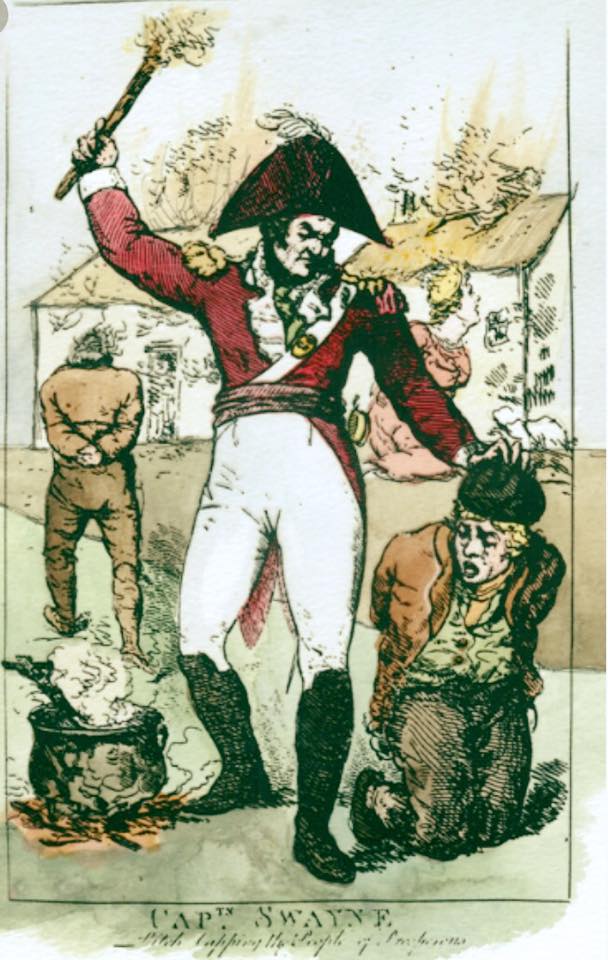
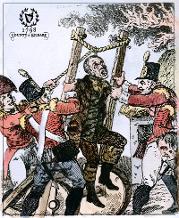
The tortures inflicted by the loyalist authorities were brutal and harsh. House burnings were one such method. One captain named Thomas Bacon was called “Burning Bacon” because of his penchant for burning peasant houses and even forcing the inhabitants of the house back inside to burn to death. Half-hangings were the practice of strangling a victim with a noose until they lost consciousness, and then repeating the process when they revived. The flogging triangle was where a victim was spread eagle and whipped with a cat-o-nine-tails. The pitch cap was used at this time too. It was paper hat filled with molten tar. The sticky oils were allowed drip down into the hair of the victims, and then the tar was set afire. The victim had to tear the burning hair from own scalp to stop the burning. The British goals were to gather information from informants, to terrorize the peasants into submission and to flush out any who might try to stand against them.
Today, we naturally match green to the Irish Republicans, but in 1798, it had only recently been chosen as a symbol of freedom by the United Irishmen. Green is said to have come from the French Tree of Liberty. Green banners would now be carried by the United Irishmen, and green was worn on their hats with ribbons and cockades. The wearing of green was a true capital offense in 1798. Several men were hanged in May of 1798 for wearing a green cockade.
This ballad came from an unknown street singer, probably a Belfast musician. Irish writer Frank O’Connor wrote that “This little song, written in pseudo-Irish dialect, probably by an Ulster Presbyterian and set to what seems to be an adaptation of a Scottish pibroch is our real national anthem.”
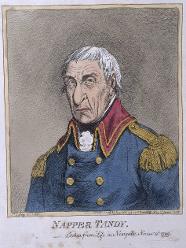
“Napper Tandy” mentioned in the song was a man named James Napper Tandy who was one of the founders of the United Irishmen. He asks about Ireland because, prior to 1798, he had spent time in the United States and France, having fled the authorities in Ireland.
4. The Wind That Shakes the Barley
In May of 1798, the rebellion was about to begin, but the British were able to capture the United Irishmen leadership in their National Directory. This left the rebellion leaderless.
The British were aware, of course, that the United Irishmen were organizing and plotting. It was part of the British strategy to goad the Irish into a premature rebellion—to get the Irish to rise when they had no French help, no leaders, no master plan, and no real communications. What ended up happening, therefore, was a series of isolated risings instead of one great upheaval.
The signal for the start of the rebellion was the capture of the mail coaches from Dublin. When the coaches would fail to arrive, people would know that the rebellion was on.
The rebellion first started in Leinster, the province in the southeast of Ireland, including the city of Dublin its surrounding counties. The first fights happened in County Kildare, towards the Midlands in Leinster, but rebellions in County Wexford soon followed, and were even more successful, at least initially.
This next ballad was written long after the rebellions, around 1861, by Dr. Robert Dwyer Joyce, professor of English literature at Dublin’s Catholic University. The words tell of a young man torn between having to leave what he loves in order to go to join the fight. In this fictional account, his decision is made by a bullet, and he leaves for Oulart Hill where the boys of Wexford were gathering.
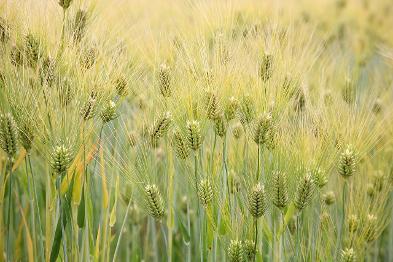
While this song doesn’t mention it specifically, it does bring to mind a phenomenon that was noted after the rebellions. The rebels often carried raw barley and oats in their pockets as provisions, and when they were killed and buried in shallow graves—“croppy holes”—the grains often grew there, and became a natural memorial of the fallen.
The Wind That Shakes the Barley- 8-10-2024.mp3
Kelly the Boy from Killane- 8-10-2024.mp3
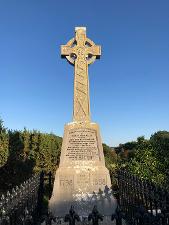
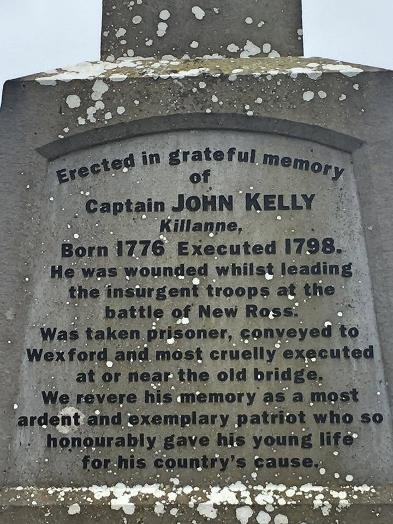
5. Kelly, the Boy from Killane
The rebellion in County Wexford was arguably the most important of the 1798 risings. It met with much success initially, surprising both sides it seems, but came to a bloody tragic end.
Beauchamp Bagenal Harvey of Bargy Castle was one of the leaders of the United Irishmen that had been captured, but as the rebellion took the town of Wexford, he was freed and again took a leadership position. His army marched on the County Wexford town of New Ross, with maybe 10,000 followers. The June 5th Battle of New Ross was one of the most bitterly contested fights of the entire 1798 rebellion. The Irish rebels had the numbers in their favor, but they lacked the training they need. They were basically pikes vs. artillery; courage and enthusiasm v. firepower.
A song by Patrick Joseph McCall from the time of the centenary of the rebellion celebrates the heroic leadership of Lt. John Kelly from Killane. He was a large man, and led the storming of the Bewley Gate at the town of Ross. This gate would go down in history as the grim gap of death, the bearna bhaoil, mentioned in the Irish National Anthem today.
6. Boolevogue
Father John Murphy was the priest of the parish at Kilcormuck, which included the village of Boulavogue among others. He had been urging peasants to turn in their weapons to avoid reprisals. On Saturday, May 26, he was hiding in the fields with his parishoners near the small country town called the Harrow. The hiding group was accosted by a detachment of the Camolin Yeomen Cavalry under Lts. Thomas Bookey and John Donovan. Lt. Bookey was piked. This was basically the start of the County Wexford portion of the Rebellion of 1798.
In the reprisals that followed, Fr. Murphy’s chapel was burnt, along with 170 farmhouses. The homeless peasants flocked to Oulart Hill, where Fr. Murphy was rallying people. The government forces made an ill-advised charge on the rebels at Oulart Hill, and the Boys of Wexford had their first victory. On May 28th, they marched south, and soon took the towns of Camolin and Enniscorthy. They set up camp nearby at Vinegar Hill. From there, the rebels captured Wexford town on the 30th of May. They had grown to about 15,000 men.
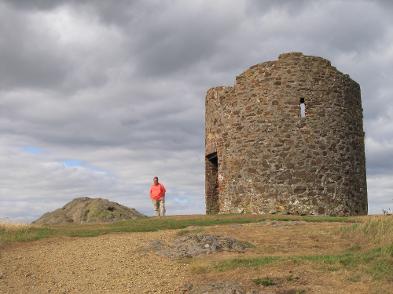
The camp at Vinegar Hill became the focus of the fight that came on June 21st. The hill here stands about 250 feet high above the town of Enniscorthy and the River Slaney, and it has large rock outcropping at its summit. Fr. Murphy had about 10,000 men here. Lt. General Gerard Lake’s crown forces were encircling the hill. The crown forces could basically line up their cannon and shell the rebels on the hill into submission. It was here at Vinegar Hill that the fighting for most of Wexford came to a defeat. Father Murphy was captured, hanged, burned, and his head placed on a pike.
This song, by Patrick Joseph McCall has been called one of the finest Irish ballads, and was written around the centenary of the battle in 1898. Its words are carved into stone monuments at Vinegar Hill today.
Boolavogue- 8-10-2024.mp3
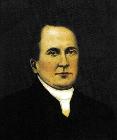
Above: Father John Murphy
Below: Scott at the summit of Vinegar Hill, 2013
The Boys of Wexford- 8-10-2024.mp3
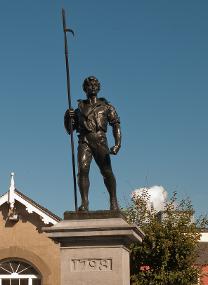
7. The Boys of Wexford
In the book Blood on the Harp, Turlough Faolain wrote: “Irish courage was not enough… Lack of trained and comparable leadership within the insurgency proved disastrous. There was little the Wexford Pikemen had not done when asked by their officers. The misfortune arose from the lack of asking.”
This is our third song written by Patrick Joseph McCall, who also wrote “Kelly, the Boy from Killane ” and “Boolavogue.” McCall also wrote this next one, the “Boys of Wexford,” about the time of the centennial of the rebellion. He seems to have made up the story of the Captain’s daughter dressing up like a man in order to fight, but most of the rest of the places named in the song follow the history of the rebellion in County Wexford.
8. The Croppy Boy
Once the rebellion in Wexford was crushed, the next question for the authorities was what to do with the “Croppies.”
There are several explanations for the term “Croppy Boy,” but one of the most likely ones is that it refers to the way that the Wexford peasants cut their hair. They began cutting their hair short in the same style that was being done by the citizens of the French Republic. Their yeomen enemies were enraged at seeing what they considered to be such a sure sign of treason.
The ferocity of the yeos against the croppies was almost uncontrollable. In the middle of 1798, Lord Charles Cornwallis (who Americans know best as the British general who surrendered to George Washington at Yorktown) was sent to Dublin to act as viceroy, and give firmer leadership. He was seen as the most capable British general. He expressed his displeasure in the task:
The violence of our friends and their folly in endeavoring to make it a religious war, added to the ferocity of our troops, who delight in murder… The minds of the people are now in such a state that nothing but blood can satisfy them.
He tried to offer amnesty and pardons to try to pacify the countryside, but few of the peasants trusted the British words at this point.
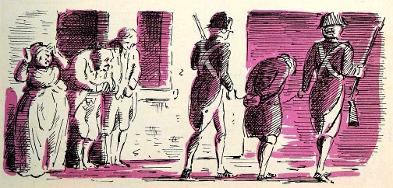
Many of the captured rebels were taken to the Geneva Barracks, a prison for the Croppies on Waterford Harbor. From here, lucky ones were sent to Botany Bay, Australia, for hard labor. Some were pressed into service in the Royal Navy (which papists previously were not allowed to serve in). About 300 were given as slaves to Friedrich Wilhelm III of Prussia to work in mines.
There are many versions of this next song, but it is thought that the verses we are using today were sung very soon after these events. Lord Cornwallis is “Lord Cornwall” in this song.
The Croppy Boy- 8-10-2024.mp3
Henry Joy- 8-10-2024.mp3
9. Henry Joy
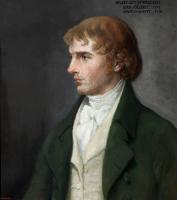
While Wexford and the rest of Leinster had been rising throughout May, the rest of Ireland had sat silent. United Irishmen in Ulster, in the northeast of Ireland, eventually joined the fight. Protestant Henry Joy McCracken was one of the founding members of the United Irishmen.
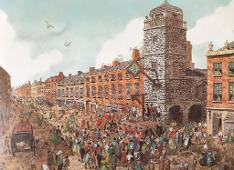
Around the beginning of June, McCracken began mustering forces in Antrim. McCraken’s forces marched on Antrim Town, and probably outnumbered the defenders there by 20 to 1 to begin with but he delayed. On June 7th, when the rebel mob burst into Antrim, the were met with artillery and grape shot. McCracken was taken prison and executed at the Belfast Corn Market, less than 100 yards from where he used to live.
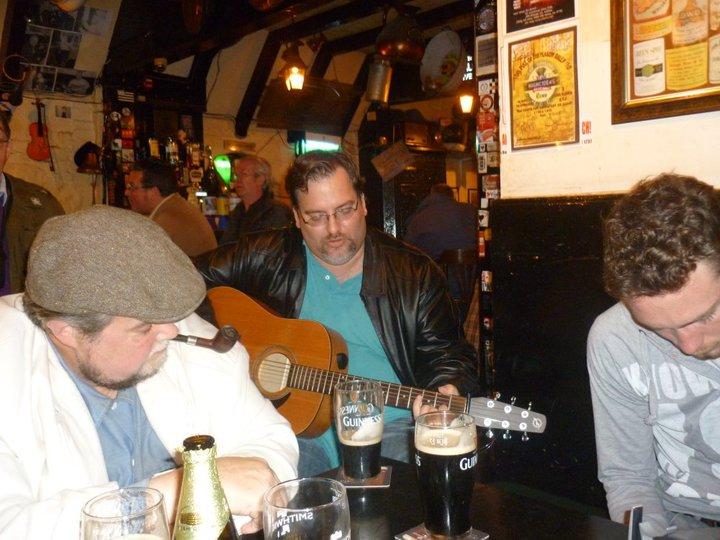
The picture below is of Matt playing in Kelly's Cellars, a pub in Belfast. It was a meeting place for Henry Joy McCracken and the United Irishmen.
10. Rody McCorley
Turlough Faolain wrote, “The crushing of the rebellion… was the signal for great brutality and slaughter by authorities. Guilt or innocence of the victims was not normally of primary concern to the soldiery.”
One of the people who may have been active in the rebellion in Ulster was a young man named Rody McCorley. It is unclear what his role in the rebellion was—if any. Was he a member of the mainly protestant United Irishmen or the group of Catholics called the Defenders? Primary sources don’t say. However, his name was made part of the 1798 legend because of a poem by Miss Ethna Carbery which she wrote in the 1890s and published in 1902. She may have been reworking an earlier poem, and the song itself has since changed since she wrote it, but it is because of that poem that young Rody McCorley's name is remembered today.
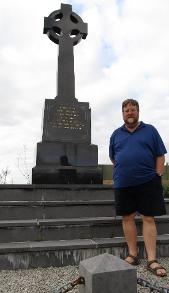
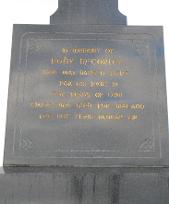
A large stone cross stands in the little town of Toomebridge today, in County Antrim, near the shores of Lough Neagh where the bridge stood over the River Bann and he was hanged on the 28 of February, 1800. Scott was able to visit that site in 2013.
Rody McCorley- 8-10-2024.mp3
Men of the West- 8-10-2024.mp3
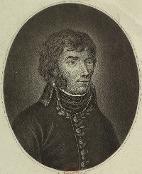
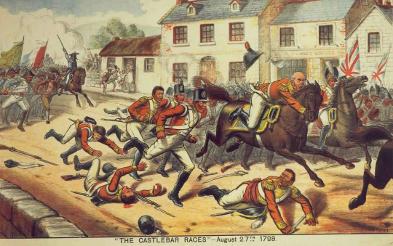
Above: Général Jean Humbert
Below: The Castlebar Races
11. The Men of the West
The province of Leinster, in the southeast of Ireland, had a great deal of fighting in it in 1798 because of the fighting in County Wexford. In the northeast, the province of Ulster joined the fighting later, with the fighitng in Antrim and other places. In the southwest of Ireland, in the province of Munster, there was almost no fighting. The United Irishmen did not have much of a presence there, for whatever reason. The last of the four provinces, Connacht, was in the west.
In France, United Irishmen like Wolfe Tone continued to press the French leaders to send help to Ireland. This French force finally came to the northwest of Ireland, the province of Connacht. Ironically, the United Irishmen had not organized much there.
Among the French commanders was General Joseph Amable Humbert, who landed his force at Killala Bay and then marched on Ballina and Castlebar. It was at Castlebar where the regular French forces met the yeomen militia cavalry, and the result was the “Castlebar Races,” when the relatively untrained British forces were outmatched by the disciplined French regulars and made a hasty retreat. The French forces were moving forward and even declared the “Republic of Connacht.”
The British forces were gathering strength and marching to Connacht. Eventually, Lord Charles Cornwallis brought 10,000 troops or more against Humbert’s 700 French and forced a surrender. The French were surprised to find that only very small numbers of Connacht men joined them on their march. Though those that did men who did join, however, are celebrated in the next song. It was written by William Rooney to celebrate the men who fought from County Mayo, and was published in 1902. It uses the familiar tune of "Rosin the Bow."
12. Bodenstown Churchyard
Theobald Wolfe Tone was a Protestant attorney from Belfast who was excited by the French Revolution and its ideals of “Liberty, Equality, and Fraternity.” “Citizen” Wolfe Tone’s writing excited the 1790s Irish and he became one of the most important leaders of the United Irishmen. He had spent much of the time before and during 1798 in France, trying to convince the leadership there to go “on the sea” to help Ireland win it freedom.
In a final attempt to invade, Tone was on a French ship named the Hoche (“hosh”) which had been named after the French admiral who tried to land the fleet in Bantry Bay previously. On Lough Swilly in the northwest of Ireland, the ship was captured by a British fleet. Though he was wearing a French uniform, Tone was recognized. When put on trial, he freely admitted that he had been fighting for Ireland’s freedom from English tyranny. In his book, Blood on the Harp, Turlough Faolain wrote that Tone’s importance to the Irish Rebel tradition cannot be overstated. His grave is now in County Kildare, where the fighting started in 1798, and is now an Irish national shrine.
This song, about the grave and memory of Wolfe Tone, was written by Thomas Davis in 1843. Appropriately, it was later sung by the musical group, The Wolfe Tones, who named themselves after the Irish leader.
Bodenstown Churchyard- 8-10-2024.mp3
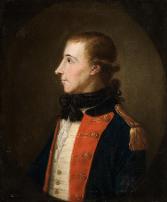
The Minstrel Boy- 8-10-2024.mp3
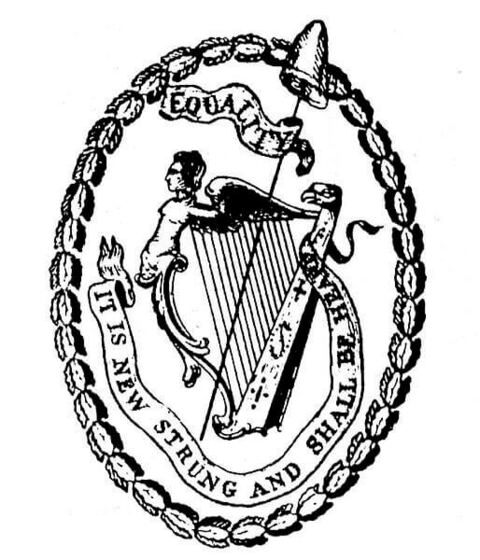
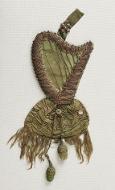
Left: Seal of the United Irishmen
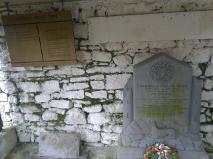
Right: A United Irishmen badge, supposed to have been worn at Vinegar Hill
13. The Minstrel Boy
Though it’s lyrics are timeless and not “chronologically specific,” the great Irish poet Thomas Moore wrote “The Minstrel Boy” with thoughts of his friends from Trinity College who had died in 1798. It was immediately popular with the Irish people. Today, we include a third verse that was not written by Moore, but which was popular in America during the mid-1800s.
14. Who Fears to Speak of '98 (with Rising of the Moon reprise)
By some estimates, 30,000 people died in the fighting of 1798, and the vast majority of them were on the rebel side.
Our last song was written by John Kells Ingram around 1843. It shows how the name of ’98 was an inspiration to generations of Irishmen who followed with hopes of an Irish Republic.
Who Fears to Speak of '98 (with Rising of the Moon reprise)- 8-10-2024.mp3